
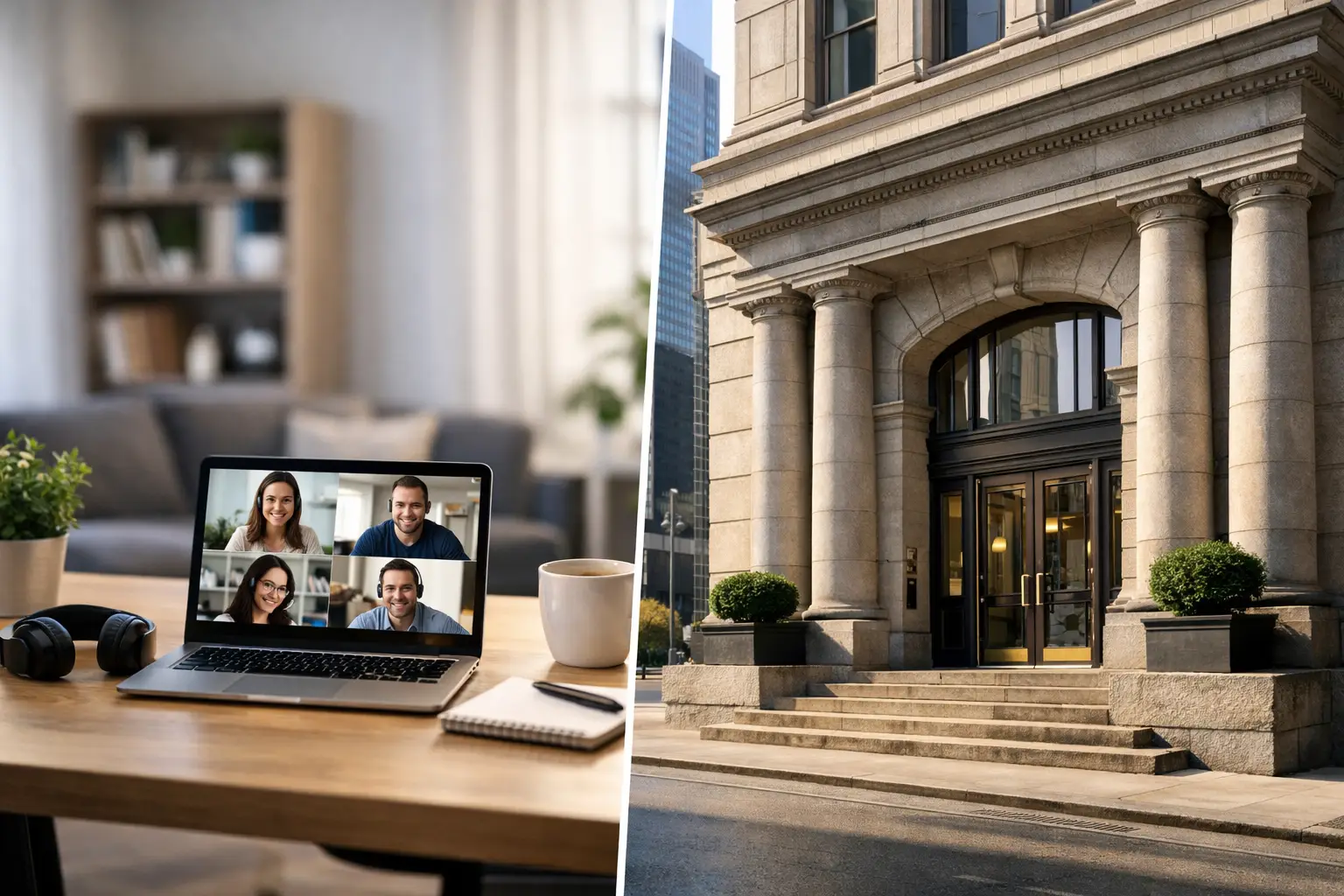
If you are comparing virtual office vs registered office, you are probably trying to solve two different business problems at once: legal compliance and day-to-day practicality. One relates to the official address your company uses for registration and formal records. The other can include mail handling, business presence, and access to workspace without committing to a full traditional lease.
The confusion is understandable because providers often use the terms loosely. But if you are launching or formalizing a business in Germany, the distinction matters. Choosing the wrong setup can create issues with registration, your imprint, mail delivery, and how credible your company appears to clients and authorities.
Virtual office vs registered office: the real difference
A registered office is the official legal address of a company. It is the address used in company records, registrations, government correspondence, and formal notices. In many jurisdictions, this is the address where authorities expect to reach the business.
A virtual office is a broader service package. It may include a business address, mail receipt and forwarding, scan service, receptionist-style support, meeting room access, and sometimes flexible desks or private offices on demand. In other words, a virtual office is usually an operating solution, while a registered office is primarily a legal function.
That does not mean they are always separate. A virtual office can include a legally usable registered business address if the provider offers compliant premises and the right documentation. That is where many founders get tripped up. They assume every virtual office can be used for registration. That is not always true.
Why the difference matters in practice
For a freelancer testing a new offer, a mailing address and occasional meeting room access may be enough. For a GmbH, UG, or growing company, the official address has higher stakes. The address must be suitable for registration and official communication, and the provider must be able to support that use properly.
This is especially relevant if you work remotely, live outside Germany, or do not want to use your home address publicly. In those cases, a virtual office sounds attractive because it is flexible and cost-efficient. But flexibility only helps if the address is legally usable for your business structure and public obligations.
That is why serious providers focus on real premises, documented address use, compliant mail handling, and clear service terms. A low-cost address that cannot support official business use often becomes expensive later when you need to correct filings or change your company details.
What a registered office is supposed to do
A registered office exists to give your business an official, traceable location. It is not mainly about where you sit and work. It is about where the business is formally based for legal and administrative purposes.
That address appears in registration records and can be relevant for tax, commercial, and legal correspondence. Depending on the company form and jurisdiction, it may also be used for your imprint and public business presence.
The key point is that a registered office must be more than a label. Authorities expect a genuine business connection to the address. That is why a proper setup matters. A provider needs to offer real infrastructure, a legitimate physical location, and procedures for receiving official mail reliably.
What a virtual office usually includes
A virtual office is designed for businesses that need a professional presence without leasing and managing a permanent office. The exact package varies, but it often includes a business address, mail acceptance, forwarding options, and the ability to book workspace or meeting rooms when needed.
For many small companies, that combination is practical. You can register a professional address, keep your home address private, receive mail in an organized way, and meet clients in a real office environment when required. You only pay for the level of infrastructure you actually use.
This is where a quality provider makes a visible difference. If the location is professionally run, mail processes are reliable, and workspace can be activated immediately, the virtual office becomes more than an address. It becomes a flexible operating base.
When a virtual office can also serve as a registered office
A virtual office can function as a registered office if the provider explicitly supports legal registration use and has the physical and administrative setup to back it up. That means real business premises, documented permission for address use, and proper handling of official correspondence.
This is not a minor detail. Some address services are suitable only for marketing use or informal mail receipt. Others are designed for formal business registration and imprint compliance. If you need a German business address for an incorporated entity, you should verify that the provider supports that exact use case.
TowrHub focuses on this compliance-driven model in Darmstadt by combining real premises with business address services, mail handling, and bookable workspace. If you need a setup that supports both professionalism and legal usability, you can review the offer here: https://buero-darmstadt.de and set up a business address here: Jetzt einrichten: https://buero-darmstadt.de/geschaeftsadresse/
Virtual office vs registered office for different business types
For sole proprietors and freelancers, the decision often starts with privacy and professionalism. If you do not want your home address on invoices, websites, or public records, a virtual office with compliant business address use may be the practical answer. You gain a more credible public presence and cleaner separation between personal and business life.
For startups and newly formed companies, the issue is usually broader. You need an address that works for formation, banking, tax correspondence, and customer-facing materials. In that case, the registered office requirement comes first, and the virtual office features become an added advantage.
For remote teams and international founders entering Germany, flexibility is often the main driver. You may not need a full office every day, but you do need a dependable address, local mail management, and occasional access to meeting space. A virtual office that can also support registration is often the most efficient option.
The cost question is not just rent versus no rent
Many businesses compare these options only on monthly price. That is too narrow. The real comparison is fixed overhead versus useful business infrastructure.
A traditional office lease brings furniture, internet, utilities, deposits, setup time, and longer commitments. A virtual office reduces those burdens dramatically. But if the service does not include compliant address use where you need it, the lower price may not solve your actual problem.
A registered office on its own may satisfy the legal requirement, but it may leave gaps in your operations. You might still need mail forwarding, meeting rooms, or temporary desks. That is why many growing businesses prefer a provider that offers both legal address functionality and scalable workspace under one setup.
Questions to ask before choosing
The right choice depends on how you plan to use the address. Can it be used for official business registration? Is it suitable for imprint use? How is mail handled, and how quickly can it be forwarded or scanned? Is there real physical infrastructure behind the service? Can you upgrade to desk space, a private office, or meeting rooms if your business grows?
Those questions matter more than labels. Two providers may both say virtual office, while only one actually offers a legally solid registered business address with operational support behind it.
The better way to decide
If your only goal is an official legal address, a registered office may be enough. If you also want privacy, mail management, client-ready space, and room to scale, a virtual office with compliant registration support is usually the stronger business choice.
What matters is not which term sounds better. What matters is whether the setup gives you a real address, real processes, and real options as your business moves from idea to operation. A good business address should reduce friction, not create more of it later.
At TowrHub you can rent a business address in Darmstadt without a full office lease.